
Guide
High-Risk Insurance After Tickets
How speeding and other moving violations accumulate into high-risk status, what major violations do, how points systems interact with insurance, and recovery.

By Rebecca Lind · Research Writer
Published · Updated
Answer in brief
A single minor ticket adds roughly 10–25%; it is the accumulation that makes a driver high-risk. Three minor violations in three years typically trigger a tier change, and a single major violation—reckless driving, racing, 30+ over, driving on a suspended licence—can raise rates 50–100% on its own and lead to nonrenewal. Insurers use their own violation schedules, not state point totals, though a suspension for points brings an SR-22 requirement. Traffic school where available keeps minor tickets off the record.
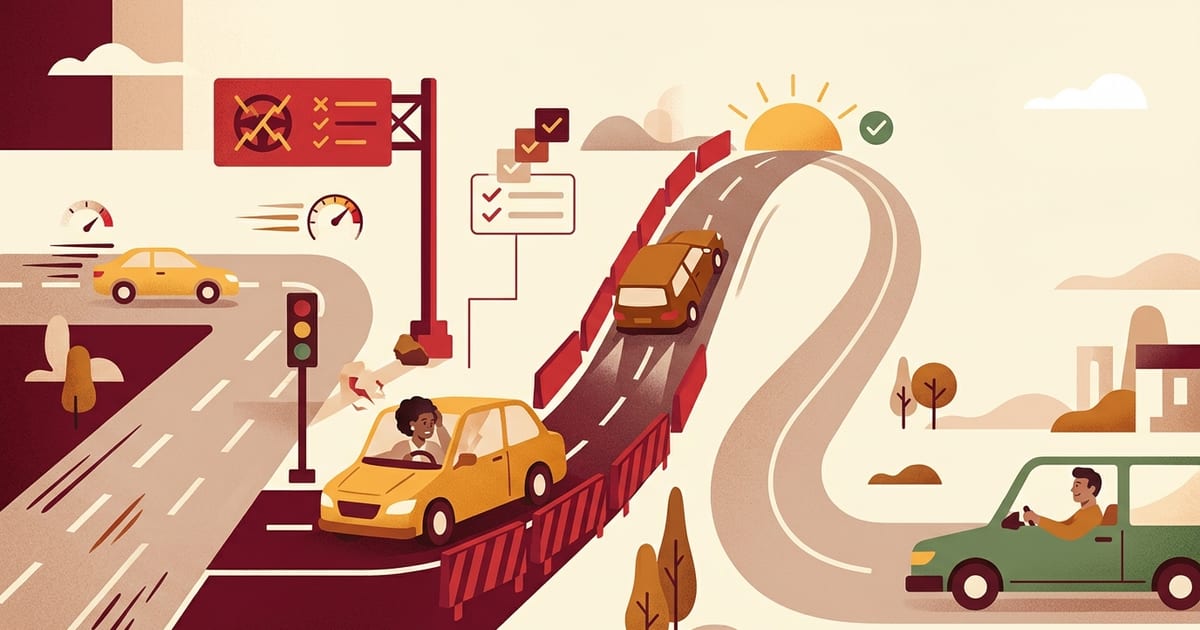
Minor vs major
| Violation | Typical increase | Duration |
|---|---|---|
| Speeding under 15 over | 10–25% | 3 years |
| Speeding 15–29 over | 20–35% | 3 years |
| Speeding 30+ over | 40–70% | 3–5 years |
| Reckless driving | 50–100% | 3–5 years |
| Running a red light / stop sign | 15–30% | 3 years |
| Distracted driving (handheld) | 15–30% | 3 years |
| Driving on suspended licence | 50–100%; SR-22 | 3–5 years |
Accumulation
Two minor tickets compound their surcharges; a third in three years commonly moves you down a tier, where the base rate itself is higher. That is the point at which a preferred insurer may nonrenew and the non-standard market becomes relevant.
Points vs insurance
State point systems govern licence status; insurers rate the underlying convictions on their own schedules. A violation that carries zero state points can still be surcharged, and a suspension for points adds a filing requirement on top.
Quote finder
Find auto insurance quotes that fit your situation
Keeping tickets off the record
Where traffic school or deferred adjudication is offered, it usually prevents the conviction from appearing on the record insurers see. Use it for minor tickets; it is rarely available for major violations.
Entries in this guide
Specific questions answered in more depth.
Questions & answers
How many tickets make you high-risk?
Typically three minor violations in three years, or one major violation.
Does traffic school lower insurance?
It usually keeps the conviction off your record, which prevents the surcharge; some insurers also give a course discount.
Do non-moving violations affect insurance?
Parking and equipment tickets generally do not.
Terms used in this guide
- Moving violation
- A traffic offence committed while the vehicle is in motion—speeding, red lights, distracted driving. Rated by insurers; parking and equipment tickets are not.
- Major violation
- A serious offence—reckless driving, racing, 30+ over, driving on a suspended licence, DUI—surcharged heavily and often leading to nonrenewal.
- Surcharge
- A percentage added to the premium for a specific incident, typically for three years.
- Rating tier
- A pricing group with its own base rates. Incidents can move a driver from a preferred to a standard or non-standard tier.
Sources and references
Legal figures on this page (minimum limits, filing periods, statutory benefits) are checked against the primary law or the state insurance regulator listed below. Links and figures last verified Nov 2026.
- Speed — Insurance Institute for Highway SafetyIndependent researchHow speed raises crash likelihood and severity; speed-limit and enforcement research.
- What determines the price of an auto insurance policy? — Insurance Information InstituteConsumer guidanceRating factors: driving record, mileage, location, age, gender, vehicle, credit-based insurance score, coverage choices. Notes ZIP-code rating is prohibited in California and Michigan and gender rating is prohibited in seven states.
- Nine ways to lower your auto insurance costs — Insurance Information InstituteConsumer guidanceShop at least three quotes; raising a deductible from $200 to $500 can cut collision/comprehensive cost 15–30%, $1,000 can save 40%+; drop physical damage on cars worth under 10× the premium; bundling, low-mileage and good-student discounts.
- What if I can't find auto coverage? — Insurance Information InstituteConsumer guidanceHow the non-standard market and state assigned-risk plans insure drivers the voluntary market declines.
- Is it legal to drive without insurance? — Insurance Information InstituteConsumer guidanceEvery state requires drivers to demonstrate financial responsibility; in most states insurance is the mandatory way to do so.
Practical guidance on this page is original editorial work. Cited sources support factual statements and do not endorse this site. Dollar ranges described as typical or illustrative are editorial estimates, not figures from these sources.
Guide
How Much High-Risk Car Insurance Costs
Typical premiums for high-risk drivers by trigger, how surcharges and tier changes combine, and why the quote spread is wider than for any other group.
Guide
SR-22 Insurance for High-Risk Drivers
What an SR-22 is, which situations require one, how long it lasts, what it costs, FR-44 in Florida and Virginia, and how to get one filed without a lapse.
Guide
How to Lower High-Risk Car Insurance Rates
The actions that lower a high-risk premium most: comparing non-standard and standard insurers, deductibles, coverage structure, telematics, defensive driving, and timing renewals to lookback windows.